
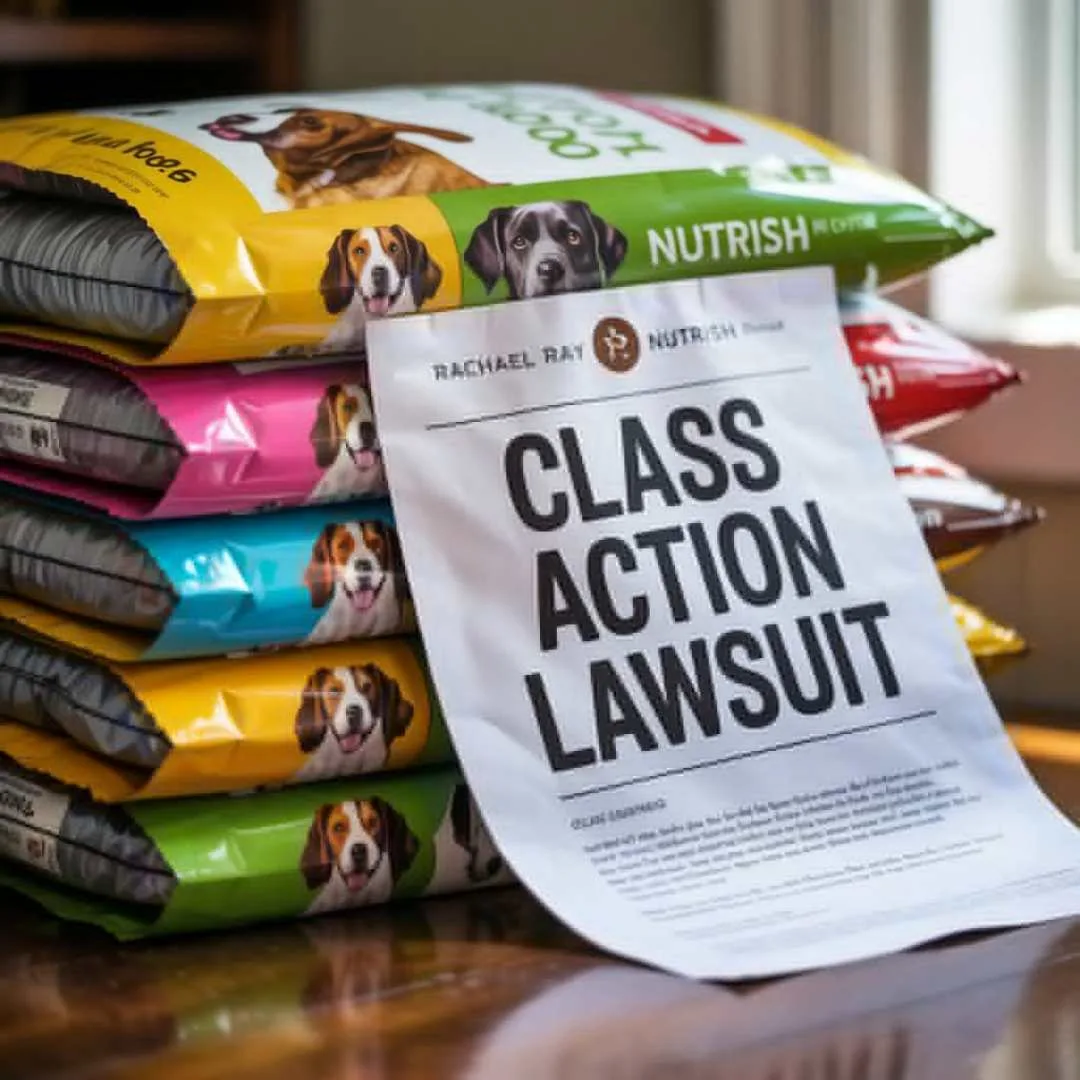
Rachael Ray Nutrish Dog Food Lawsuit 2025 Shocks Pet Owners!
Is your question about the Rachael Ray Nutrish dog food lawsuit 2025? Yes — it dates back to March 2025, when a proposed class action lawsuit was filed against Post Consumer Brands LLC. The suit alleges that the Rachael Ray Nutrish brand falsely advertised its pet food labeling compliance as “natural” and “free from artificial preservatives,” despite containing ingredients like citric acid, which is produced through chemical processing.
The Rachael Ray Nutrish Natural premium dog food lawsuit claims this violates California consumer protection laws and seeks to represent a nationwide class of consumers who are affected by these marketing claims.
Rachael Ray pet food class action overview:
Click this Link: Rachael Ray pet food class action overviewRachael Ray pet food class action claims consumers were misled
Click this Link: Rachael Ray pet food class action claims consumers were misledRachael Ray Nutrish Pet Foods Not as ‘Natural’ as Advertised, Class Action Lawsuit Claims
A new class action lawsuit alleges that Rachael Ray Nutrish pet food is deceptively advertised and sold as “natural,” despite containing multiple synthetic ingredients.
According to the 23-page false advertising complaint, the prominent “natural” claims on Nutrish packaging are misleading because many of the brand’s pet foods are made with mislabeling ingredients such as glycerin, xanthan gum, dicalcium phosphate, zinc sulfate, copper sulfate, citric acid, among others.
The Rachael Ray dog food lawsuit argues that products labeled as “natural” should not contain these synthetic additives—many of which are created through intensive chemical processing and fail to meet consumers’ expectations for truly natural pet food labels.
The case further alleges that defendants Ray Marks Co. LLC (owner of the Rachael Ray trademark) and Ainsworth Pet Nutrition LLC have profited by capitalizing on consumers’ demand for natural, additive-free pet food.
According to the complaint, the companies have “substantially benefited” at the expense of health-conscious pet owners who were misled into believing Nutrish products were safer and more nutritious than competitors’ offerings.
Which Nutrish pet foods are mentioned in the lawsuit?
Click this Link: Which Nutrish pet foods are mentioned in the lawsuit?Who’s covered by the lawsuit?
Click This Link: Who’s covered by the lawsuitI have purchased at least one of these Nutrish pet foods. How can I join the lawsuit?
If you have purchased any of the products listed on the website, you do not need to sign up or take any action to join the Rachael Ray dog food class action lawsuit. Typically, only when a lawsuit settles are the people involved—known as class members—required to act. This typically involves completing and submitting a claim form online or by mail.The Scandal That Damaged Rachael Ray’s Reputation Forever
When Rachael Ray launched Nutrish in 2014, she pitched it as essentially doggy fine dining. She even introduced Nutrish Dish, a “super premium Paté” line of dog food based on her own recipes, featuring ingredients like slow-roasted chicken and farm-raised potatoes.
“Nutrish Dish was born as a dog-friendly version of the meals I prepare daily on my show and at home,” she told Forbes, adding that her ray dog Isaboo, a notoriously picky eater, enjoyed the same food she and her husband did. Ray also shared that she personally taste-tests each product, a commitment meant to build trust in the brand.
“Nutrish may not be the cheapest food on the market, but I believe 10,000 percent that our pet food is by far the best quality available,” she said.
Plaintiff Markeith Parks called Ray’s bluff four years later, claiming that the “natural” marketing claims were “false, deceptive, and misleading.” The Rachael Ray dog food lawsuit alleged that Nutrish products were far from natural because they reportedly contained a controversial herbicide linked to health concerns.
According to the suit, “the products contain the unnatural chemical glyphosate, a potent biocide and endocrine disruptor with health effects that are still being discovered.”
For its part, Nutrish stood firm, insisting it would never put anything harmful in a pet’s food. Still, for a brand that often promotes trust and transparency, the Rachael Ray Nutrish Natural Premium Dry Dog Food lawsuit left a noticeable dent in Ray’s once-pristine image.
Nutrish Stood by Its Claims
To be fair, Rachael Ray’s Nutrish brand didn’t exactly wave the white flag. Instead, it promised to take a closer look at its product line.
“We are reviewing the details of the claims, but we stand firmly behind the quality, mislabeling ingredients, and sourcing practices of our products,” Bobby Modi, vice president of pet food and snacks for the brand, said in a statement. “As lovers of both people and animals, it goes without saying that we do not use pesticides as an ingredient in our products. We are committed to aggressively contesting these claims.”
There is currently no active lawsuit in court. The case was dismissed in April 2019 because it failed to prove how much, if any, glyphosate was present in the food or whether it posed a danger. Even after a revised complaint was filed, the case was dismissed again. The court ruled that any trace amounts were minimal, well below FDA limits, and unlikely to mislead the average pet owner.
What’s interesting is how Rachael Ray handled the entire ordeal. While her team managed the damage control, she chose to stay silent — despite being the literal face of the brand. Amy Prenner, communications expert and founder of The Prenner Group, believes this was a missed opportunity.
“Issuing a statement expressing concern for consumer safety and clarifying her role would have demonstrated accountability,” Prenner said, noting that using her massive platform to address the issue could have helped soften the backlash. Court cases may end, but PR disasters can linger. “Public opinion is shaped by headlines and sentiment, which can be far more damaging to a celebrity’s brand and career,” Prenner added.
Rachael Ray Nutrish and Solid Gold Lawsuits: What You Need to Know.
In both cases, the pet food companies are accused of using — at best — false or deceptive marketing practices.
Both Rachael Ray Nutrish and Solid Gold are facing lawsuits.
In April 2019, the Nutrishell case was dismissed. It was later amended and re-filed, only to be thrown out again by the same judge in February 2020. “There is no evidence that glyphosate residues affect consumer choice,” the judge stated, adding that the use of the word “natural” to market pet food is therefore “not likely to mislead a reasonable consumer.”
Here we go again — two more popular cat and dog food brands are facing lawsuits from pet parents, who claim they were misled and deceived.
A pair of new pet food lawsuits have emerged in recent weeks, marking the latest chapter in a growing trend of American consumers taking their fight for pet food safety testing to the courtroom.
This time, the products under fire are Rachael Ray Nutrish dog food and Solid Gold cat food.
Nutrish Lawsuit Against Rachael Ray Nutrish Dog Food
Markeith Parks, a New York resident, filed a lawsuit against Ainsworth Pet Nutrition LLC, the manufacturer of the Rachael Ray Nutrish line of dog food.
Parks claims that independent testing of the dog food revealed traces of glyphosate — a chemical commonly found in weed killers like Roundup.
“Rachael Ray Nutrish aggressively advertises and promotes its products as ‘natural.’ Such claims are deceptive, false, and misleading,” the court documents allege.
The $5 million lawsuit claims that the products are “not natural.” It further alleges that they contain glyphosate, a synthetic chemical known as a potent endocrine disruptor and biocide, with well-documented adverse health effects.
According to Dogs Naturally magazine, glyphosate is actually a common “hidden” ingredient in pet food. In a 2015 study, researchers Stephanie Seneff and Anthony Samsel tested nine popular brands of cat and dog food — and every single one showed “significant” levels of glyphosate.
“We suspect that glyphosate may be a cause of cancer in pets,” the researchers wrote.
J.M. Smucker — the pet food giant that recently acquired Ainsworth Pet Nutrition (and is already defending itself against “jaw-dropping” allegations in a class-action lawsuit over this year’s massive Gravy Train dog food recall) — has rejected Parks’ claims.
“We are reviewing the details of the claims, but we stand firmly behind the quality, ingredients, and sourcing practices of our products,” Bobby Mody, vice president of pet food labeling compliance and snacks at Smucker, said in a statement. “As animal lovers and human beings, it goes without saying that we do not include pesticides as an ingredient in our products. We intend to contest these claims aggressively.”
The U.S. Environmental Protection Agency considers glyphosate to pose minimal risk to humans, though it is slightly more toxic to wildlife.
Parks’ lawsuit argues that while Nutrish is marketed as a natural food, the brand allegedly failed to disclose the presence of the chemical on its packaging. The suit claims that “no reasonable consumer, given these ‘natural’ representations, would expect the product to contain unnatural chemicals.”
Solid Gold Pet Food Lawsuit
Meanwhile, California resident Walter Watson is suing pet food company Solid Gold Pet Food, alleging that its cat food contains chemicals and/or toxins—including heavy metals—that are not disclosed on the packaging.
In addition, the lawsuit claims:
“Hedy Butler and the defendants engaged in misleading, deceptive, and false marketing practices by promoting contaminated cat foods despite making quality claims.”
Third-party testing reportedly revealed the presence of metals such as cadmium, arsenic, lead, and mercury. However, research from Petful indicates that all detected levels generally fall below the “maximum tolerable limit” recognized by authorities.
Testing also detected bisphenol A (BPA), a controversial industrial chemical, in some Solid Gold cat foods.
The highest level of BPA found was 169.7 μg/kg in Solid Gold Grain-Free High Protein with Chicken — still within the range previously reported in other pet foods.
Solid Gold pet food has remained silent; as of press time, there was no mention of the lawsuit on the company’s website or social media pages. Unlike the Nutrish lawsuit, this case has received very little media coverage.
On its website, the company highlights its safety protocols, stating:
“Solid Gold works with trusted ingredient suppliers, carefully blends ingredients, sources only high-quality components, and tests samples from every batch to ensure its products are safe and consistent.”
The company added, “We operate a ‘positive release’ program with all our foods. When a batch of food is produced, samples are taken and sent to a laboratory for various analyses, including testing for pathogens such as Salmonella. Only once the results are received and approved is the food released for distribution from our warehouse.”
Rachael Ray Nutrish Lawsuit: The case is based solely on allegations and complaints.
FDA Says Ingredients “Must Be Declared”
In both cases, the plaintiffs allege that pet food companies are engaging in false or deceptive marketing practices by deliberately omitting — at best — ingredients with negative connotations from their packaging.
We spoke with the Food and Drug Administration (FDA), and health communications specialist Anne Norris said, “The agency does not comment on pending litigation. Generally, however, if a product contains an ingredient, it should be declared on the ingredient list.”
He added, “Contaminated ingredients are rarely intentionally added to any food, so they are unlikely to appear on the ingredient list. However, even if a company knew about the contamination and included it on the list, it would still violate FDA regulations for pet food if the contaminant disclosure is present in a quantity sufficient to potentially harm humans or pets.”
Consumer Lawsuits on the Rise
As we previously noted when pet food makers Orijen and Acana were sued earlier this summer, these types of lawsuits seem to be the weapon of choice for consumers today when faced with a federal safety agency, the FDA.
Here’s a quick list of the cases that are currently active:
- Wellness Pet Company Class Action (Zeiger et al. v. WellPet LLC et al.) — Originally a lawsuit filed in 2017 but recently amended, this case alleges that WellPet knowingly sold dog food containing lead, arsenic, and BPA while marketing it as healthy and safe.
- Big Heart Pet Brands Litigation (Gravy Train dog food recall)
- Orijen et Acana (Lippert et al. v. Champion Petfoods USA, Inc. et al.)
- Solid Gold (Watson v. Solid Gold Pet, LLC)
- Nutrish (Parks v. d/b/a Rachael Ray Nutrish, a division of Ainsworth Pet Nutrition, LLC)
Remember: lawsuits are just a collection of unproven allegations.
“Lawsuits are based on complaints, not recalls,” says Mike Sagman, managing editor of Dog Food Advisor. “If you Google almost any major brand, you’ll find hundreds of complaints, claims, and lawsuits for many of their products.”
Before you jump to conclusions, take some time to do a little digging yourself:
- Understand FDA guidance: Set aside time to read and understand what the FDA says about pet food.
- Read labels carefully: Learn how to read pet food labels and practice this skill diligently in the store. Pet food companies change recipes without notifying consumers, so check labels periodically to ensure nothing has changed.
- Consult your veterinarian: Ask your vet for advice, express your pet safety concerns, and get an honest opinion about the food.
- Investigate incidents: If there is an incident—as with any lawsuit mentioned above—review the details carefully.
- Research your pet food company: Check its ingredient labels, recall history, and mission statement.
PetSmart Discontinues Nutrish Cat Food, Dog Food Still Available
“PetSmart is no longer carrying Nutrish cat food. No reason was listed, and they are still carrying the dog food.”
All the other information about Chewy, H5N1, cat food, and avian flu is irrelevant to the topic of the dog food lawsuit.
Rachael Ray Dog Food Class Action Lawsuit Thrown Out Again

UPDATE: Read the latest on dog food recalls in the recent Sportmix pet food class action lawsuit, filed following the deaths of 70+ dogs. A New York federal judge has dismissed a class action lawsuit claiming that Rachael Ray Nutrish dog food was labeled as “natural” despite containing trace amounts of the herbicide.
U.S. District Judge Louis E. Stanton had previously dismissed the claims, but plaintiff Markeith Parks filed an amended complaint, alleging that the company violated New York’s General Business Law, as well as false advertising and breach of express warranties. Because glyphosate is a weed killer, Parks argued that the dog food made by Ainsworth Pet Nutrition LLC should not be labeled “natural.”
In August 2018, Parks filed her complaint, accusing Ainsworth Pet Nutrition of knowingly misrepresenting the presence of glyphosate in Rachael Ray Nutrish dog food and causing harm to consumers. She notes in her Rachael Ray Nutrish class action lawsuit that no consumer would expect dog food labeled “natural” to contain chemicals that could be harmful to pets.
The lawsuit also argued that by misleading consumers with the term “natural” in its advertising, the company could charge a premium Paté price for its products. The court dismissed the original class action lawsuit in April 2019 due to a lack of specificity.
The judge wrote that the presence of negligible amounts of glyphosate in dog food products, which do not have “toxic,” harmful, or “carcinogenic” effects, is unlikely to influence consumers’ purchasing decisions and is therefore not harmful.
After Parks amended the class action suit, the defendants filed another motion to dismiss the complaint or to stay the proceedings until they received guidance from the Food and Drug Administration (FDA) and the Environmental Protection Agency (EPA) regarding the use of the term “natural.”
However, Parks argued that the amount of glyphosate in the dog food is not material and that it is misleading to label any product as “natural” if it contains harmful ingredients like glyphosate, regardless of the quantity.
According to the judge’s opinion, the complaint did not specify the amount of glyphosate in the product or whether the weed killer was non-toxic or harmful. However, in its previous order, the court allowed the plaintiff to replead the facts with supporting information about the amount of glyphosate in the dog food.
Parks states that laboratory testing detected glyphosate at a level of 19.85 parts per billion. The court noted that this level is equivalent to 0.0005 percent of the permitted level in “animal feed.”
“The levels of glyphosate in the tested products are negligible and well below the FDA limit, supporting the conclusion that the products’ glyphosate residues are unlikely to affect consumer choice and that labeling them as ‘natural’ is not materially misleading to a reasonable consumer,” the judge wrote.
Do you think dog food labeled as “natural” should contain trace amounts of a weed killer? Be sure to leave a message in the comments section below.
The plaintiffs are represented by Michael J. Gabrielli of Gabrielli Levitt LLP and Kim E. Richman of Richman Law Group.
The Rachael Ray Nutrish dog food class action lawsuit is Markeith Parks v. Rachael Ray Nutrish d/b/a Ainsworth Pet Nutrition LLC, Case No.1:18-cv-06936-LLS, in the U.S. District Court for the Southern District of New York.
“Rachael Ray Lamb Meal and Brown Rice Recipe Dog Food DNA Analysis
Click this link: “Rachael Ray Lamb Meal and Brown Rice Recipe Dog Food DNA Analysis
Conclusion of the Rachael Ray Nutrish dog food lawsuit
In conclusion, the Rachael Ray Nutrish dog food lawsuit took shape in March 2025, when a proposed class action was filed against Post Consumer Brands LLC. The lawsuit alleged that the Rachael Ray Nutrish brand falsely advertised its pet food as “natural” and “free of artificial preservatives,” despite containing ingredients such as citric acid, which is produced through chemical processing.
The class action further claims that consumers were misled by this marketing and that Ray Marks Company, LLC (owner of the Rachael Ray trademark) and Ainsworth Pet Nutrition, LLC capitalized on the growing demand for natural, additive-free pet food.
We have compiled all the key details regarding the Rachael Ray Nutrish dog food lawsuit. For additional information or settlement updates, feel free to contact us or leave a comment below.
Q1.Is There a Recall on Rachael Ray Nutrish Dog Food?
Ans. No, there are currently no active recalls for Rachael Ray Nutrish products in 2025. The last known recall occurred in 2015 and involved several types of wet cat food due to excessive vitamin D levels.
While some pet safety concerns have been shared on social media about potential issues with Rachael Ray Nutrish dog food, no confirmed recalls have been reported.
For the most accurate and up-to-date information on pet food recalls, it’s best to check the FDA’s official website.
Q2.Which Dog Food Companies Are Being Sued?
Ans. Defendants in these cases have so far included the following manufacturers and retailers:
BluePearl Vet Hospital (BluePearl Vet, LLC)
Banfield Pet Hospital (Medical Management International, Inc.)
PetSmart, Inc.
Hill’s Pet Nutrition Inc.
Nestlé Purina PetCare Company (Purina)
Mars Petcare US, Inc. (Royal Canin & Iams)
Q3.Who Owns Rachael Ray Nutrish?
Ans. Post Holdings acquired Rachael Ray Nutrish, 9Lives, Kibbles ’n Bits, and other pet food brands from J.M. Smucker Co. for $1.2 billion, according to a company statement.
Q4.Why Do Veterinarians Recommend Hill’s Science Diet?
Ans. Veterinarians often recommend Hill’s Science Diet because the brand is backed by extensive scientific research, employs veterinary nutritionists to develop its formulas, maintains strict quality control in its own manufacturing facilities, and offers a wide range of specialized diets tailored to different life stages and health conditions.

Leave a Reply